The Announcement That Split a Player Base
When Crystal Dynamics and Square Enix revealed that Spider-Man would join the roster of Marvel's Avengers as a post-launch downloadable character, the initial excitement was immediate. Spider-Man is, after all, Marvel's most recognizable superhero — a character whose cultural footprint extends far beyond comic book readership into film, television, and gaming. The prospect of playing as the webslinger alongside Iron Man, Thor, Hulk, Captain America, Black Widow, and Ms. Marvel felt like a natural fulfillment of the Avengers fantasy.
Then came the caveat: Spider-Man would be available exclusively on PlayStation 4 and PlayStation 5 versions of the game. Xbox, PC, and Google Stadia players would not receive the character — not as a timed exclusive, not as a paid add-on, but as a permanent platform-specific inclusion. The announcement generated significant backlash, raised questions about the ethics of platform-exclusive content in multiplatform games, and prompted Crystal Dynamics to publicly explain the reasoning behind the decision.
The community response was swift and divided. PlayStation players generally welcomed the news as a bonus for their platform of choice, while Xbox and PC players expressed frustration that a character as central to the Marvel universe as Spider-Man would be permanently walled off from their version of the game. Forums, social media, and gaming press coverage amplified the debate, with some commentators arguing that platform-exclusive gameplay content in a full-priced multiplatform title crossed a line that cosmetic exclusives had not. The controversy became a case study in how platform deals, while commercially beneficial for the parties involved, can generate sustained community friction that damages goodwill toward a live-service game.
The Business Relationship Behind the Exclusivity
The explanation, when it came, was straightforward and rooted in licensing rather than development choice. Crystal Dynamics Co-Head Scot Amos addressed the question directly in interviews with multiple outlets, including Den of Geek and IGN.
The core of the matter is Sony's longstanding relationship with Marvel regarding the Spider-Man character. Sony Pictures holds the film rights to Spider-Man, and Sony Interactive Entertainment published Insomniac Games' Marvel's Spider-Man (2018), a critically acclaimed PlayStation-exclusive title. This existing partnership created what Amos described as "a unique opportunity for PlayStation fans" — an opportunity that was not available to other platform holders because the underlying character rights flow through Sony.
Amos was careful to frame the decision as relationship-driven rather than arbitrary: "Because of the relationship Sony and PlayStation have with Marvel, there was a unique opportunity for PlayStation fans to be able to have that hero brought to them." He emphasized that the decision was not Crystal Dynamics' alone but emerged from the existing rights structure between Sony and Marvel.
When pressed on whether the exclusivity was permanent or timed, Amos declined to confirm either way, stating only: "It's what we've announced so far is that it is exclusive to PlayStation. So it has no other limits on it at the moment." This carefully worded response left room for interpretation but suggested that no plans existed to bring Spider-Man to other platforms.
The licensing explanation, while legally sound, did not fully satisfy critics. The argument from frustrated players was not that Sony lacked the rights, but that a multiplatform game marketed to all players should deliver gameplay parity across platforms. The question was not whether Sony could arrange an exclusive, but whether it should — and whether publishers who accept such deals bear responsibility for the resulting fragmentation of the player experience.
A Different Spider-Man From Insomniac's Version
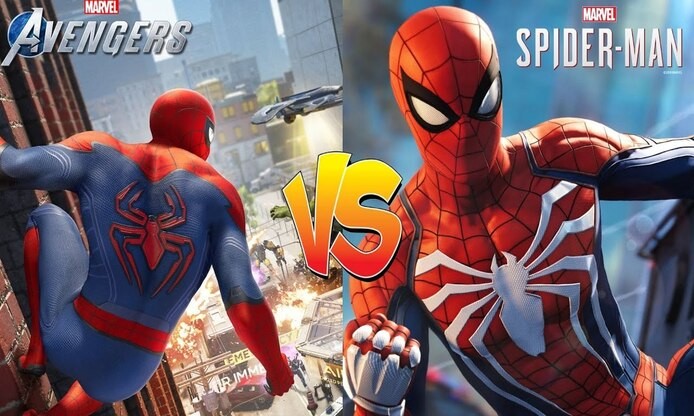
One important clarification that Crystal Dynamics provided was that their Spider-Man would be a distinct interpretation, separate from the version appearing in Insomniac's games. The studio stressed that Marvel's Avengers features its own Spider-Man — with a different suit design, different combat animations, and a different place in the narrative.
However, Amos revealed that the two studios had been in communication. Marvel facilitated an introduction between Crystal Dynamics and Insomniac, allowing both teams to share insights and compare approaches. "Marvel did an introduction between Crystal and Insomniac," Amos explained. "We could sit there and look at each other's content and game." This collaboration ensured thematic consistency while maintaining creative independence.
Eagle-eyed fans noted that Insomniac's Marvel's Spider-Man (2018) contained a reference to the Avengers operating on the West Coast, and Marvel's Avengers opens in San Francisco. Amos acknowledged this with a smile: "I will say we have had drinks together and said, 'Wouldn't it be cool if...' So it could be something like that may have led to getting a couple of these little nuances." However, he confirmed that the two games exist in separate fictional universes — the shared references are winks, not canonical connections.

The Only Platform-Exclusive Character
One piece of reassurance that Crystal Dynamics offered was that Spider-Man would be the only character subject to platform exclusivity. Amos confirmed to IGN: "That is the only character that we are doing that way." All other post-launch characters, including Hawkeye and Kate Bishop, would be available on all platforms.
This limitation was significant. It meant that Xbox and PC players would still receive the full core roster and all subsequent character additions — they would simply miss one character. Amos framed this as a broader value proposition: "Marvel's Avengers has a lot of heroes, and with the scope and the breadth of this game and this universe, players are going to have their hands full with a lot to play with."
Historical Context: Platform-Exclusive Characters in Games
The practice of offering platform-specific characters in multiplatform games is not without precedent, though it has become less common in recent years.
Soulcalibur II (2003) is perhaps the most famous example. The fighting game featured a unique guest character on each platform: Link (from The Legend of Zelda) on GameCube, Spawn on Xbox, and Heihachi (from Tekken) on PlayStation 2. Unlike the Marvel's Avengers situation, each platform received an exclusive character, creating a rough parity. Subsequent entries in the Soulcalibur franchise abandoned this practice.
Disney Infinity 3.0 (2015) offered Boba Fett as a PlayStation-exclusive character ahead of other platforms, meaning Xbox and other platform players could not access the bounty hunter at launch. This decision generated similar frustration among the game's community.
The Marvel's Avengers situation is distinct from these examples in one key respect: rather than each platform receiving a different exclusive character, only one platform received an additional character. This asymmetry is what made the decision particularly contentious — it was not a trade but a one-sided inclusion.

How Spider-Man Played on PlayStation
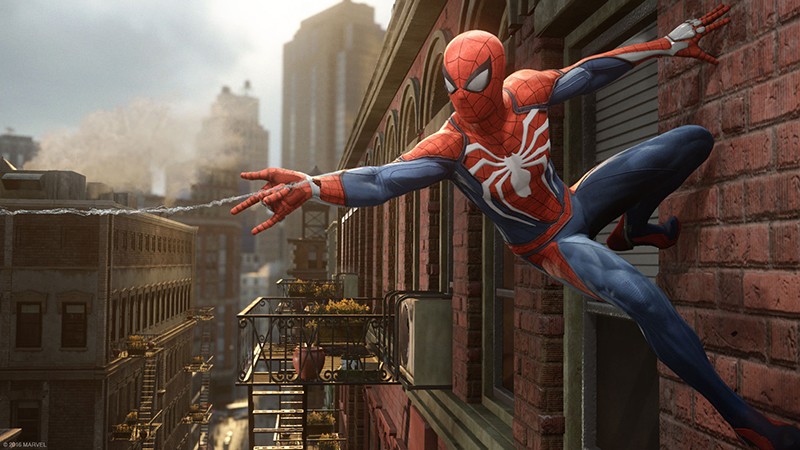
For PlayStation players who did receive Spider-Man, the character brought a distinctly different gameplay experience. Spider-Man's traversal mechanics — web-swinging between environmental points, wall-crawling on vertical surfaces, and executing rapid dodge maneuvers — were unlike anything in the base roster. His combat kit emphasized agility and crowd control, with web-based abilities that could immobilize enemies and set up combo opportunities for other team members in co-op play.
The character also came with a dedicated story mission, the "With Great Power" operation, which provided narrative context for his arrival and established his relationship with the existing Avengers team. This content was exclusive to PlayStation, further widening the gap between versions of the game.
The Broader Implications for Multiplatform Games
The Spider-Man exclusivity in Marvel's Avengers raises questions that extend beyond a single game. As the games industry increasingly embraces live-service models — where games are supported with regular content updates over multiple years — the question of who receives what content, and on what timeline, becomes more consequential.
When a game is marketed as a multiplatform title with a shared roadmap, players on all platforms expect parity in gameplay content. Cosmetic exclusivity (such as platform-specific skins) is generally accepted. But gameplay-affecting exclusivity — particularly the addition of a fully playable character with unique abilities, story content, and gear — creates a tangible inequality in the player experience.
Crystal Dynamics attempted to mitigate this by confirming that Spider-Man would be the only exclusive character and by emphasizing the breadth of content available on all platforms. Whether this mitigation was sufficient depended largely on how much individual players valued the Spider-Man character specifically.
What This Means for Players Today
For players considering which version of Marvel's Avengers to purchase, the Spider-Man exclusivity has practical implications.
PlayStation players received Spider-Man as a free DLC character, adding a new playable hero with unique traversal mechanics (web-swinging, wall-crawling), combat abilities, and story content. The character integrated into the game's existing gear and progression systems, offering the same customization options as core team members.
Xbox and PC players received all other post-launch content — including Hawkeye, Kate Bishop, and additional regions — but never gained access to Spider-Man. For fans of the character specifically, this represented a meaningful gap in the roster.
The decision also influenced purchasing behavior. Players who owned both a PlayStation and an Xbox or PC had a clear incentive to choose the PlayStation version. Those who owned only non-PlayStation platforms faced the choice of accepting an incomplete roster or investing in additional hardware.
The Legacy of the Decision
The Marvel's Avengers game has since been discontinued, with Crystal Dynamics ending support and the game being delisted from digital storefronts. But the precedent set by the Spider-Man exclusivity continues to inform discussions about platform-exclusive content in multiplatform titles.
The case illustrates a tension that persists in the industry: licensing deals and platform partnerships can deliver genuine value to one segment of players while creating perceived inequity among others. Whether this trade-off is acceptable depends on the specifics of each deal, the transparency of communication, and the overall value proposition of the game beyond the exclusive content.
For Marvel fans, the Spider-Man situation in Marvel's Avengers remains a cautionary example — a reminder that even within a game built around assembling Earth's Mightiest Heroes, not every hero assembles on every platform.