Friday evening rolls around and you are staring at two app icons with the same swipe motion. Tinder, the volume king with a reported 75 million monthly users, and Bumble, the women-come-first challenger that grew out of Tinder's own co-founder drama. The apps look alike for the first thirty seconds, then diverge hard. This comparison walks through the four rounds that matter, and ends with a pick you can defend to yourself.
The Short Answer
Pick Tinder if you want the biggest pool, the fastest feedback loop, and you are comfortable doing the first-move work yourself. Pick Bumble if you want structure over volume, you are dating in a mode where women-first messaging matters to you, or you want one app that also covers friendship and networking. Neither is objectively better, and your local dating scene probably decides more than the feature lists do.
Why These Two Are Compared So Often
They share the same swipe core, an origin story, and the same crowded market, so they get pitted against each other in every "best dating app" list. The real differences hide in the parts you only notice after a few sessions: who talks first, whether a match can expire, how deep a profile goes, and what the free tier actually lets you do. Surface-level they are twins; behaviorally they are different products.
Round 1: First Impressions and Setup
Tinder: Setup takes about five minutes. Name, age, gender, email, a photo or two, an age range and a distance radius, and you are swiping. The profile is minimal on purpose, and you can link Instagram and Spotify if you want more texture. The gender options include a non-binary range under the Beyond Binary section.
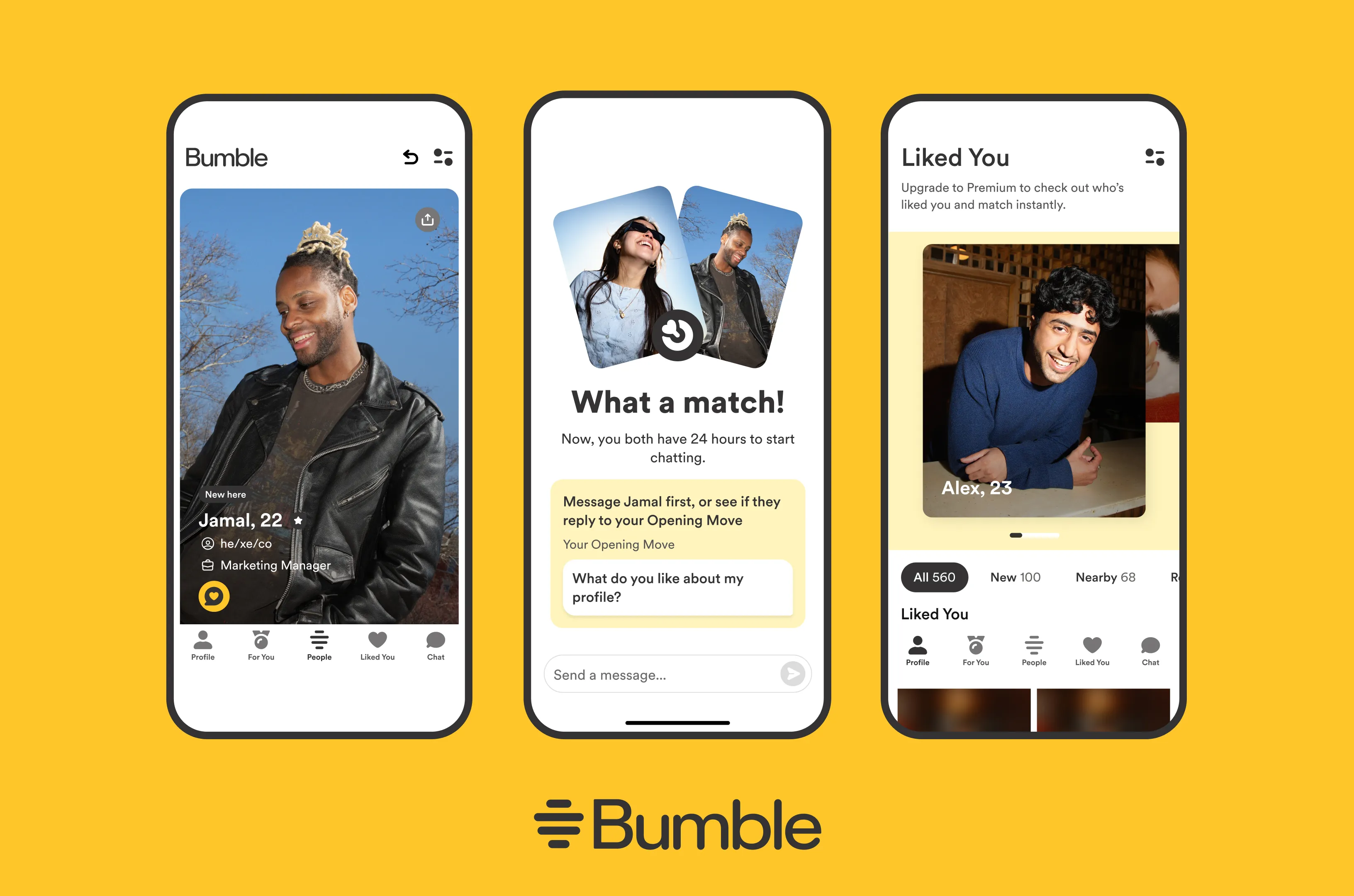
Bumble: Setup asks the same basics plus what you are there for: dates, friends, or networking. Profiles support more field depth, education, height, politics, pet ownership, plus answer-prompt text, and the app asks about gender identity directly in the flow, including non-binary and gender-fluid options.
Winner: Bumble, for a setup that asks what you actually want before it shows you a single card.
Round 2: Everyday Use and Features
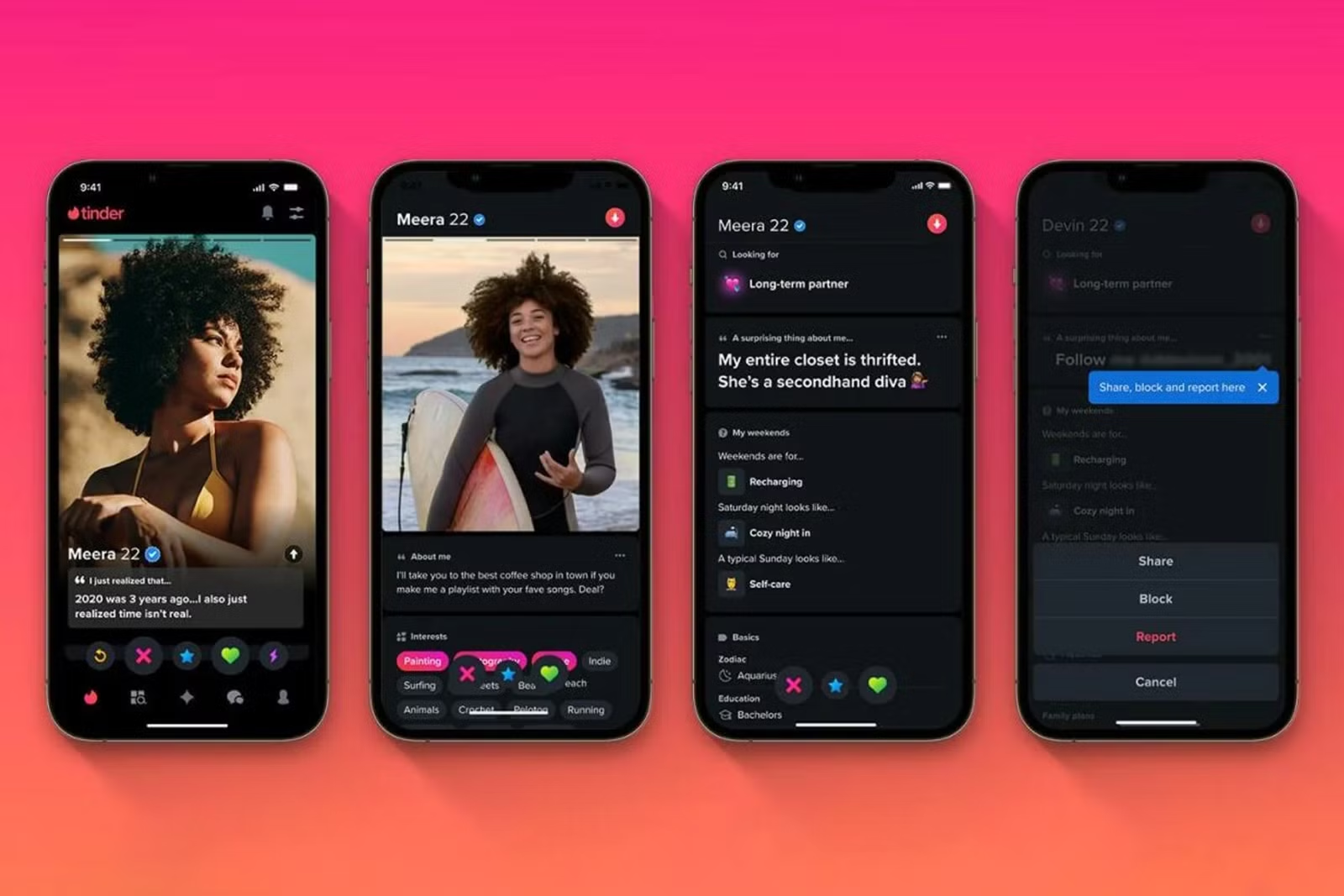
Tinder: The engine is pure volume. Swipes are fast, the daily like limit gates the free tier, and the feature set pushes discovery: Passport to swipe anywhere in the world, Top Picks for a daily curated batch, and an Explore tab that sorts profiles by interest and intention. Super Likes get one free per day under typical terms, and the algorithm leans on activity, so an active session surfaces more profiles than a quiet one.
Bumble: The signature rule still defines the vibe: in opposite-sex matches, the woman makes the first move, with the match expiring after 24 hours if nothing is sent, though 2025 and 2026 versions let women opt to allow the man to open when they prefer. Same-sex and gender-nonconforming matches skip the rule entirely. Opening Moves gives pre-set icebreaker questions for the first message, the Question Game adds structured prompts mid-chat, and in-app voice and video calls let you vet someone before you share a phone number.
Winner: Tinder, if your goal is volume per minute; Bumble, if your goal is conversation quality and safety tools. This round is a philosophy match, so call it Bumble by a hair for structure.
Round 3: Performance and Reliability
Tinder: With a reported 75 million monthly users across 190-plus countries, it is the default app in most markets, which means the pool rarely runs dry even in smaller towns. That scale comes with a trade: more profiles means more low-effort ones, and the platform has worked on photo verification and scam detection, but the signal-to-noise ratio is real. The app also upgraded safety tooling, including date plans sharing and an integration with the Noonlight emergency service that lets you give a contact your location during a meetup.
Bumble: At a reported 45 to 50 million users across 150-plus countries, the pool is smaller, and in smaller towns you can hit the end of the swipe deck in a few days. The ecosystem skews toward complete profiles, and the algorithm visibly rewards them, so the matches you do get tend to carry more information. Bumble filters weapon photos and hate content, blurs unsolicited explicit images, and adds a Snooze mode that hides your profile while you take a break.
Winner: Tinder for raw availability, Bumble for moderation and verification depth. Split.
Round 4: Price and Long-Term Cost
Tinder: Three paid tiers: Plus, Gold, and Platinum, with monthly prices reported roughly from the mid-20s to the high-40s in US dollars depending on your plan and location, and longer terms cutting the effective monthly rate. Plus unlocks unlimited likes, Passport, and rewinds; Gold adds seeing who liked you plus daily Top Picks; Platinum layers priority likes and messaging before a match. Like limits and ads push most regulars toward a tier eventually.
Bumble: Boost, Premium, and Premium+ tiers, with reported US pricing roughly from the high-20s to the mid-50s per month, plus a one-time Lifetime premium option around the 200-dollar range. The free tier is genuinely usable, fuller messaging access, swipe, match, and basic filters, so more people can stay free longer. Both apps price dynamically by age and location, so the sticker on your screen can differ from any number quoted here.
Winner: Bumble, for a usable free tier and a lifetime option that cancels the subscription treadmill.
The Scorecard
| Aspect | Tinder | Bumble |
|---|---|---|
| User pool (reported) | 75M+, 190+ countries | 45-50M, 150+ countries |
| First move | Either side | Women-first (opposite-sex) |
| Profile depth | Minimal | Deep, prompt-based |
| Safety tools | Photo verify, Noonlight, share plans | Photo verify, blur unsolicited images, Snooze |
| Extras | Passport, Explore, Top Picks | BFF, Bizz, voice/video calls |
The Final Pick
If you are in a big city, want the widest net, and do not mind being the initiator, Tinder is the honest pick, especially for travelers, since Passport scales with your wanderlust. If you want conversations that start with actual words, profiles that tell you something, and the option of friendship and networking in one icon, Bumble fits better, and its free tier lets you validate that before spending anything. People who match intent to app, not the other way around, are the ones who stop uninstalling and reinstalling.
FAQs
Which app is more popular in 2026?
By reported monthly users, Tinder is larger at roughly 75 million, with Bumble around 45 to 50 million. Popularity also varies by region, so the app with more people in your specific city matters more than the global number.
Can I use Tinder and Bumble at the same time?
Yes, and many people do during the first two weeks to see which one surfaces better matches locally. Just keep your profile photos current in both, because the algorithms favor active, complete profiles.
Is Bumble really safer than Tinder?
Both run photo verification and moderation. Bumble adds women-first messaging, blurring of unsolicited explicit images, and strict content policies; Tinder counters with a larger emergency-safety toolkit. Neither is bulletproof, and the biggest safety variable is how you behave, not which app you open.
Why do prices differ from what I see in the app?
Both apps use dynamic pricing by age, location, and subscription length, and promotions roll out unevenly. The numbers quoted here are reported ranges, not a quote for your account, so the in-app pricing screen is the only figure that counts.
Which One Deserves Your Home Screen
Download Tinder when you want the biggest room in the building, download Bumble when you want better conversations per swipe, and keep whichever one you actually open on a Tuesday night. The app that survives your honest habits is the one that stays installed.
Safety Note and Disclaimer
Our website is a third-party distribution and information site, not the official app store or the app developer.
Download only from a source you trust and verify the source.
Review the permissions the app requests and decline anything that looks excessive.
Keep your device's security settings and antivirus up to date.
Prefer official stores (Google Play) when the app is available there.
This article is an independent overview and is not affiliated with the app's developer.